

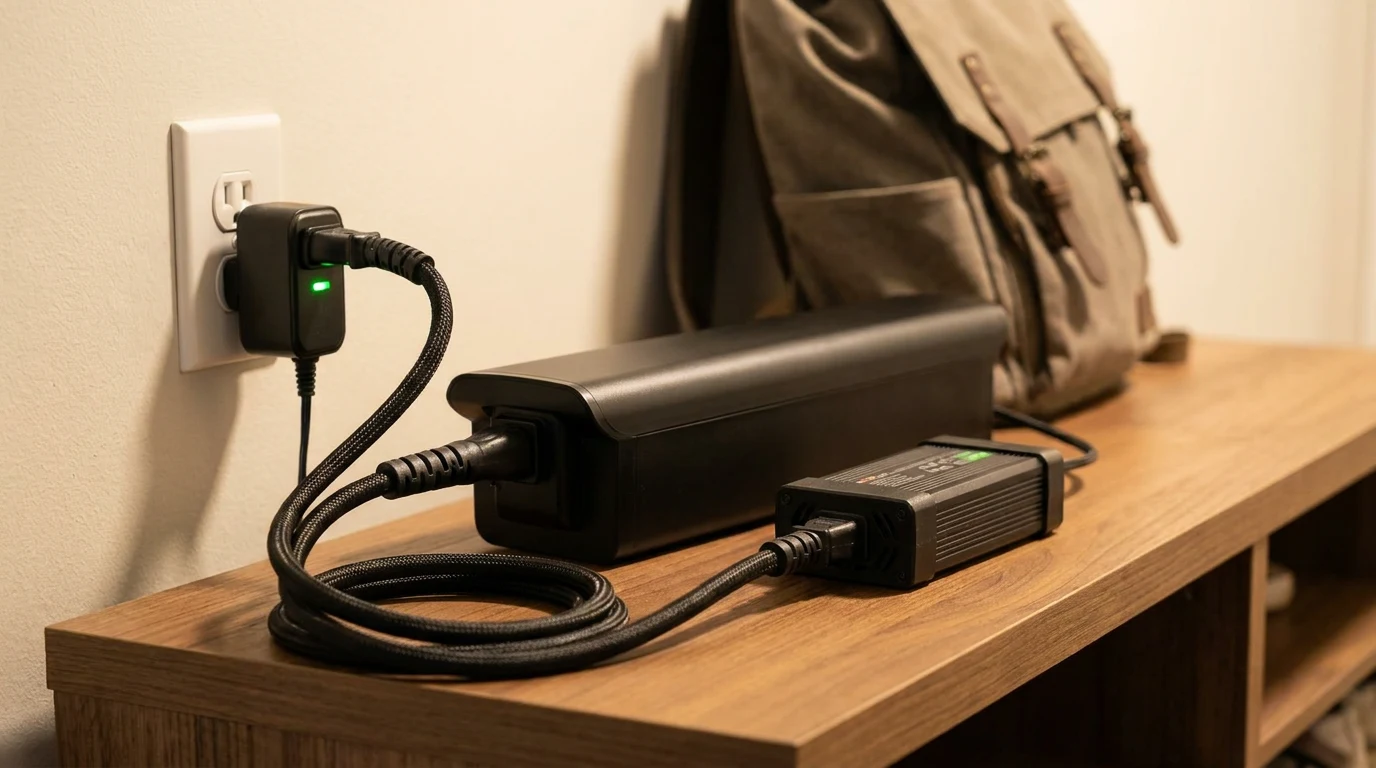
If you live in an apartment, condo, or townhouse, your e-bike battery doesn't live in a detached three-car garage. It lives three feet from your desk, next to your co-working backpack, or plugged into an outlet near the front door.
Which brings up a question every tech commuter asks eventually: When I plug this 48V battery in overnight, what is actually preventing it from becoming a news headline?
The National Bicycle Dealers Association (NBDA) recently rolled out a major industry initiative urging bike shops and manufacturers to pledge strict adherence to third-party electrical safety standards—specifically UL 2849 and UL 2271.
While industry press treats this like a boring regulatory update, for anyone storing and charging an e-bike in living spaces, it’s the difference between total peace of mind and an unexpected letter from your HOA or property manager.

Breaking Down the Alphabet Soup: UL 2849 vs. UL 2271
Let’s cut through the acronyms. You don't need an electrical engineering degree to evaluate your ride, but you do need to know what you’re actually paying for when a spec sheet lists "UL Certified."
- UL 2271 (The Battery Pack Standard): Tests the individual lithium-ion battery pack itself. Testing labs subject the battery to severe physical impact, thermal shock, drop tests, overcharging, and short-circuit conditions. If a battery passes UL 2271, its internal BMS (Battery Management System) successfully shuts down power before thermal runaway can occur. Learn more at UL Solutions E-Bike Certification.
- UL 2849 (The Complete Electrical System Standard): Tests the entire system as a single integrated ecosystem—the battery, smart charger, controller, motor, wiring harness, and handlebar display. It ensures that the charger and controller speak the exact same voltage language as the battery.
Why does this distinction matter? Because a certified battery plugged into a cheap, uncertified $15 Amazon replacement charger voids the safety loop. UL 2849 guarantees the whole system works together without overheating during a Texas summer heatwave.

What This Actually Solves for Apartment & Urban Dwellers
If you bike four miles to a co-working space or downtown office, an e-bike is the ultimate urban transit tool. But urban living introduces friction points that suburban garage owners never think about:
- HOA & Landlord Lease Compliance: Property management companies and high-rise HOAs across major metro areas are actively updating lease agreements to ban uncertified e-mobility devices. Owning a fully certified commuter rig ensures your ride complies fully with multi-family residential safety guidelines. Check our San Antonio E-Bike Laws Guide and Texas E-Bike Laws Guide for full regional breakdowns.
- Texas Summer Thermal Protection: Storing a battery in a 105°F South Texas garage or charging it near a sunlit window subjects lithium cells to intense ambient stress. UL-certified packs feature smart thermal cutoffs that prevent charging if ambient temperatures spike beyond safe thresholds.
- Dedicated Insurance & Theft Protection: Standard renter's and homeowner's insurance policies frequently exclude high-voltage e-bikes or cap payouts well below replacement cost. Dedicated coverage through Sundays Insurance provides comprehensive protection for theft, accidental damage, multi-family battery fire liability, and roadside assistance.

You Don't Have to Spend $4,000 to Stay Safe
For years, full UL certification was an expensive luxury reserved for $4,000+ European mid-drive bikes. That dynamic has completely shifted.
Direct-to-consumer and retail partners like Himiway (with models like the Himiway A7 Full-Suspension Commuter and Himiway D5 2.0) and Eunorau (such as the Eunorau G30-Cargo and Eunorau FLASH Lite) have systematically certified their lineups to UL 2849 and UL 2271 standards while keeping prices accessible between $1,200 and $2,200. Explore our full All E-Bikes Collection and Commuter E-Bikes Collection.
They proved that heavy-duty payload racks, dual-battery range, and full electrical compliance don't require breaking the bank.
The Pathfinder Checklist Before You Buy
Before you hit "Order" on your next commute rig or plug in an unverified replacement charger, run through these three checks:
- Check the Label: Look for an official mark from a Nationally Recognized Testing Laboratory (NRTL) such as UL Solutions, TÜV Rheinland, or SGS directly on the battery case and motor housing.
- Never Swap Chargers: Stick strictly to the manufacturer-supplied smart charger matched to your bike's BMS.
- Verify Spec Transparency: If a brand hides its electrical certifications or lists vague "designed to UL standards" claims without official NRTL documentation, keep shopping. Check our E-Bike Class Confusion Guide.
At Pathfinder Pedal, we do the regulatory and safety homework so you don't have to. Every commuter rig in our lineup is vetted for strict compliance, clean tech integration, and real-world durability. Check out our E-Bike Accessories & Gear and 5-Minute E-Bike Maintenance SOP before heading out on your next commute.
5 Questions to Ask Before Charging Indoors
- Does the battery pack carry a physical NRTL stamp? Look for UL 2271 or TÜV marks etched directly on the casing.
- Is your charger the original factory-matched unit? Never use generic third-party replacement bricks.
- Does your building lease restrict uncertified e-mobility batteries? Fully certified systems walk right past lease restrictions.
- Are you charging in a high-temperature zone? Avoid charging near direct afternoon sunlight or enclosed hot closets.
- Have you reviewed your renter's or homeowner's liability terms? Specialized coverage via Sundays Insurance ensures you are fully covered against theft, crash damage, and residential liability. Review our E-Bike Purchase Agreement & Warranty and Return & Refund Policy.
The Bottom Line
A safety certification isn't a marketing badge—it's your insurance policy for living and charging in the real world. When your commuter rig carries UL 2849 and UL 2271 credentials, you ride with total confidence and plug in overnight with complete peace of mind.
If you are evaluating your next commuter setup—or verifying your current charger specs—we are here when you are ready. No pressure. Just the specs, and a buddy who already did the homework.
Explore our All E-Bikes Showroom or Contact Our San Antonio Team today.


